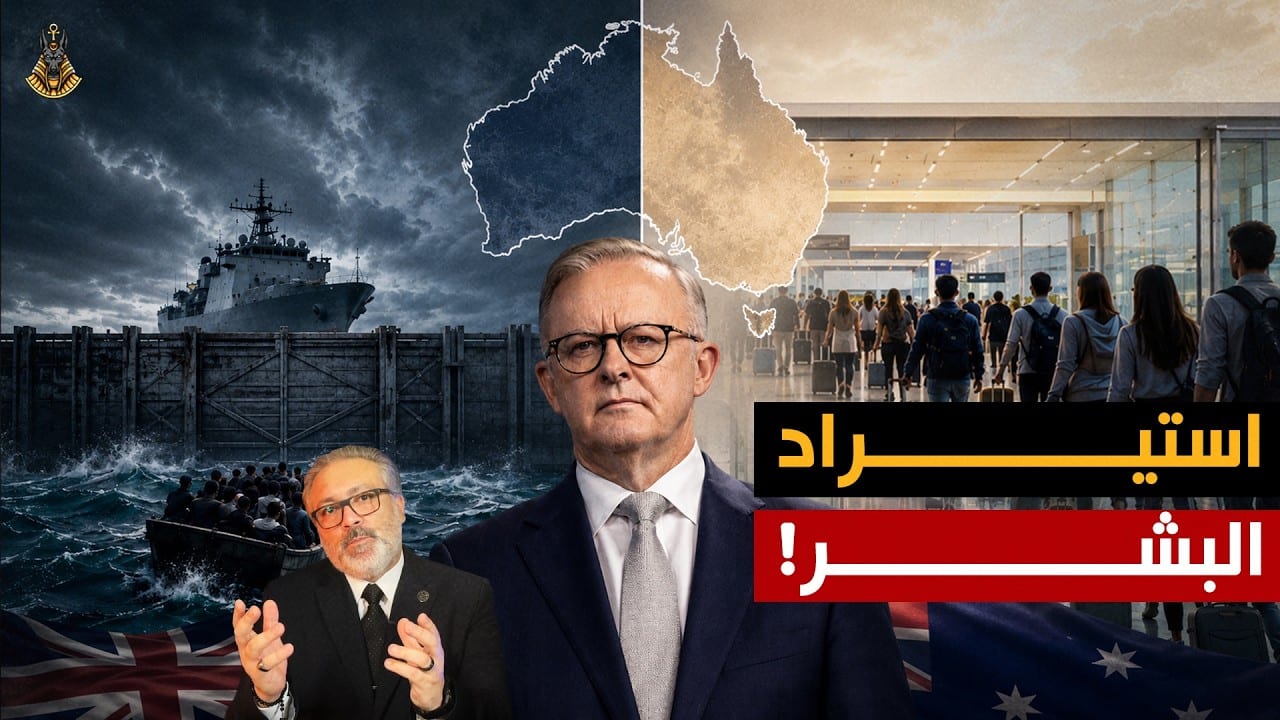
Australia operates a bifurcated migration policy: stringent maritime border enforcement contrasts sharply with accelerated legal migration through terrestrial and aerial channels. This distinction between pathways exposes underlying economic imperatives that diverge from dominant security narratives, reflecting acute demographic and labour deficits in an environment of sustained inflationary pressure and sluggish economic growth.
Maritime borders: deterrence and closure
Since the early 2010s, Australia has pursued a hardline approach to irregular maritime migration through multiple mechanisms:
- Maritime quarantine policy: Interception and redirection of vessels towards third countries, principally Nauru and Papua New Guinea.
- Extended detention: Prolonged detention of maritime arrivals, sometimes exceeding multiple years.
- Substantial administrative costs: Billions of Australian dollars invested in security and military infrastructure for maritime border enforcement.
Despite these expenditures, maritime arrivals represent a negligible share of total migration inflows to Australia. According to Australia's Department of Home Affairs data, irregular maritime migration accounts for less than 5 percent of recorded migration cases in recent years, raising substantive questions about the economic and security returns on these substantial expenditures.
Systematic migration: accelerated openness and economic priorities
Conversely, Australia has substantially expanded migrant intake through formal channels—skilled migration, temporary work, and student visas—in direct response to genuine economic pressures:
- Acute labour shortages: Particularly acute in construction, healthcare, hospitality, and agriculture; the COVID-19 pandemic exposed significant supply gaps across these sectors.
- Inflationary pressure: The Reserve Bank of Australia (RBA) relies on labour force expansion and productivity gains to combat inflation, necessitating both skilled and unskilled workers.
- Future demographic outlook: Demographic projections signal declining natural fertility rates in Australia, positioning migration as a policy tool to sustain economic growth.
Comparative data: the quantitative record
| Indicator | 2019–2020 | 2021–2022 | Change |
|---|---|---|---|
| Systematic migration (thousands) | 160 | 480 | +200% |
| Temporary work permits | 350 | 750 | +114% |
| Recorded maritime arrivals (cases) | 0 | 32 | Increase |
| Maritime border expenditure (A$ billion) | 1.2 | 1.8 | +50% |
Policy contradictions and economic rationale
This divergence between maritime and terrestrial policies reveals several underlying tensions:
- Symbolic measures versus material needs: Stringent maritime policy delivers political and security reassurance to domestic constituencies, yet diverges substantially from genuine economic priorities.
- Duality in public discourse: Migration is framed as a security threat in political debate, while systematic migrants are treated as essential economic resources.
- Growing reliance on foreign labour: Rather than investing in domestic training or productivity improvements, Australia has opted for expanded migration, potentially suppressing local wages and reducing governmental incentives to enhance public services and education.
Outlook and broader context
Australia's current strategy reflects wider global economic pressures: in an environment of elevated inflation, commodity scarcity, and slowing growth, migration has become a strategic necessity rather than an optional policy lever to finance economic growth and offset demographic deficits. This trajectory, however, carries long-term social risks and may depress real wages for local workers, particularly in lower-skill sectors.
Moreover, stringent maritime policy may lose efficacy without concurrent investment in origin and transit countries to address root causes of mass migration. Deterrence alone has proven ineffective across comparable international policy models over extended periods.